Strengthening our School Ecosystem
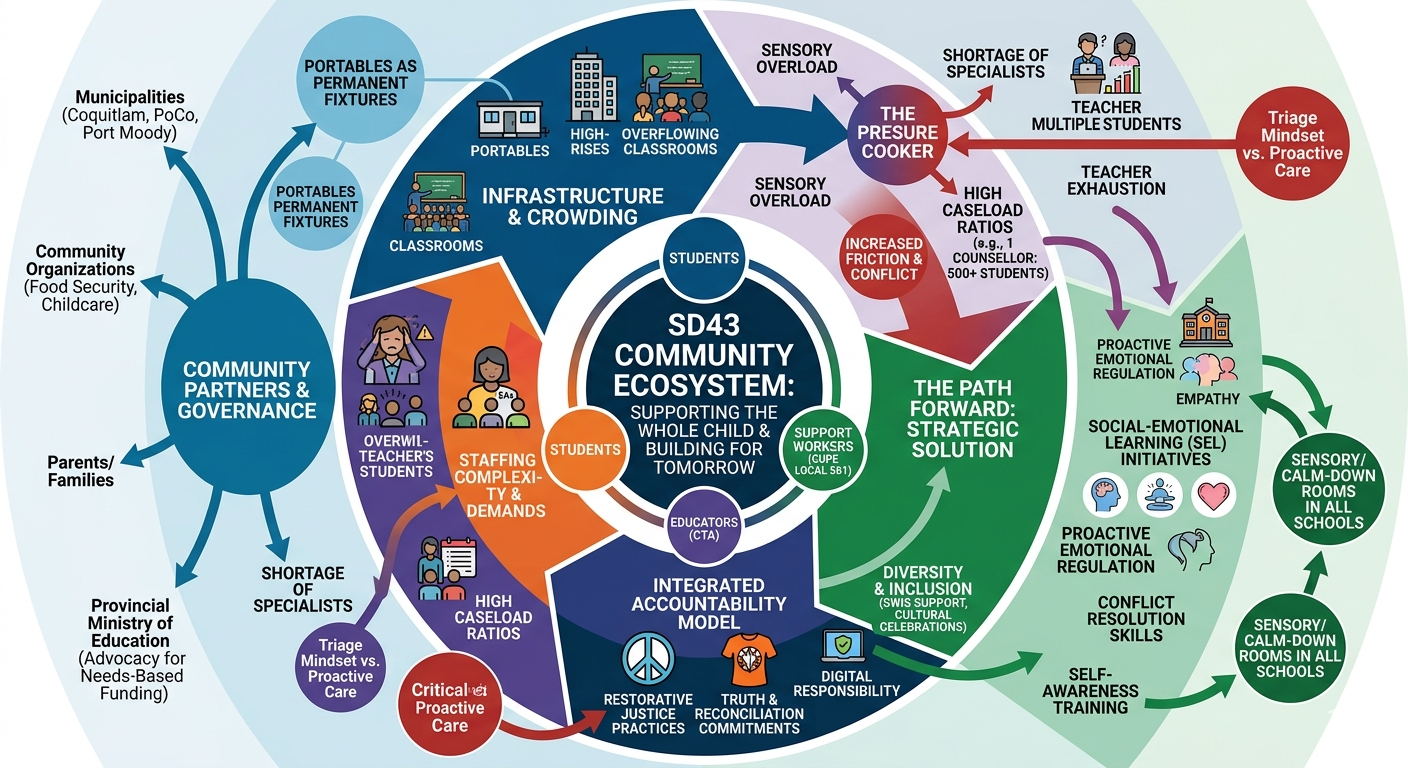
Schools are complex ecosystems composed of students, educators, psychologists, support workers, families, and community partners. Currently, our neighborhoods are densifying at lightning speed, but school construction lags far behind. By the time new facilities open their doors, they are already at capacity. Portables have shifted from temporary band-aids to permanent fixtures, creating a "pressure cooker" environment. The rise in English Language Learners (ELL) and students with multiple designations (ADHD, neurodiversity, and language barriers) has made the average SD43 classroom incredibly complex. When the budget gets tight, the first things scrutinized are often "non-enrolling" positions—the EAs, custodians, and clerical staff who keep the lights on and the halls safe.
Actionable Steps:
When the classrooms are overcrowded with students, everyone loses. Hallways and cafeterias become overcrowded, social tensions rise, and a severe shortage of specialized staff leaves our educators overwhelmed and burning out. We are being squeezed by a "Funding Gap" that threatens our long-term stability. We must stabilize this ecosystem by valuing and protecting the human pieces of the puzzle.
Stengthening our School Ecosystem - The “Puzzle Pieces”
The Foundation —CUPE Locals: We must ensure safe building operations and clean functioning environments by maintaining robust staffing levels for Custodians, Maintenance and IT workers, administrative and clerical staff that keep our schools running.
The Heart — CTA & Specialists: I would advocate for additional mental health resources to support our teachers in managing the increasing learning complexity and fight for competitive specialist compensations to address recruitment and retention ultimately reducing assessment waitlists.
The Support Network — Education Assistants & Frontline Staff: Vulnerable students need consistency. We must push for full-day EA positions for those looking for those opportunities and stronger retention strategies to prevent the "revolving door" of support staff that hurts student trust. This include supporting to stabilize Education Assistants (EA’s), Early Childcare Educators (ECE’s), Support Workers, Strong Start Facilitators, and Indigenous Support Workers positions.
The Community Connection — SD43 serves as a critical infrastructure pillar and massive economic role: I would advocate for joint city initiatives to strengthen municipal ties and connections to align school needs with municipal recreation, library, and infrastructure planning and fight for fair wages, benefits and job security so our workers can afford to live in our cities.
