Overcrowding - The Emotional Toll & The SEL Solution
When you pack a classroom past its intended limit, the physical space for hands-on projects, collaborative learning groups, and quiet reading corners completely vanishes.
The Crunch: Teachers are forced to spend more time on "crowd control" and less time on individualized instruction, taking away from core training. Physical space for hands-on projects or quiet reading corners disappears. I would advocate for adherence to class sizes that accommodates physical spaces that allow for movement, creativity, and the focused attention every student deserves.
Shared Spaces, Conflict, and Bullying: Students begin to "territorialize" space to find a sense of security, which leads to exclusion and social friction. They instinctively begin to "claim" areas to find a sense of personal predictability and security. This environment rapidly breeds exclusion, heightened anxiety, and social friction that frequently escalates into bullying.
Deindividuation: When students feel like "just a number" rather than members of a tight-knit community, the social "brakes" that prevent bullying often fail. It is harder to bully someone you know personally; it is much easier to target someone who is just a face in a massive crowd.
Reduced Supervision: Common areas like bathrooms, locker rooms, and far corners of the playground become harder to patrol effectively. Overcrowded schools often have lower staff-to-student ratios in these "high-risk" zones, giving bullies more opportunities to act without consequences.
The Daily Struggle: Students placed in portables are physically segregated from the main building. They are forced to trek through rain, wind, or snow just to use a washroom, visit the library, or attend an assembly. This creates both a literal and figurative barrier to the school's central social culture. Our students deserve to be in the centre of the school building, fully integrated into the school’s resources and social heartbeat.
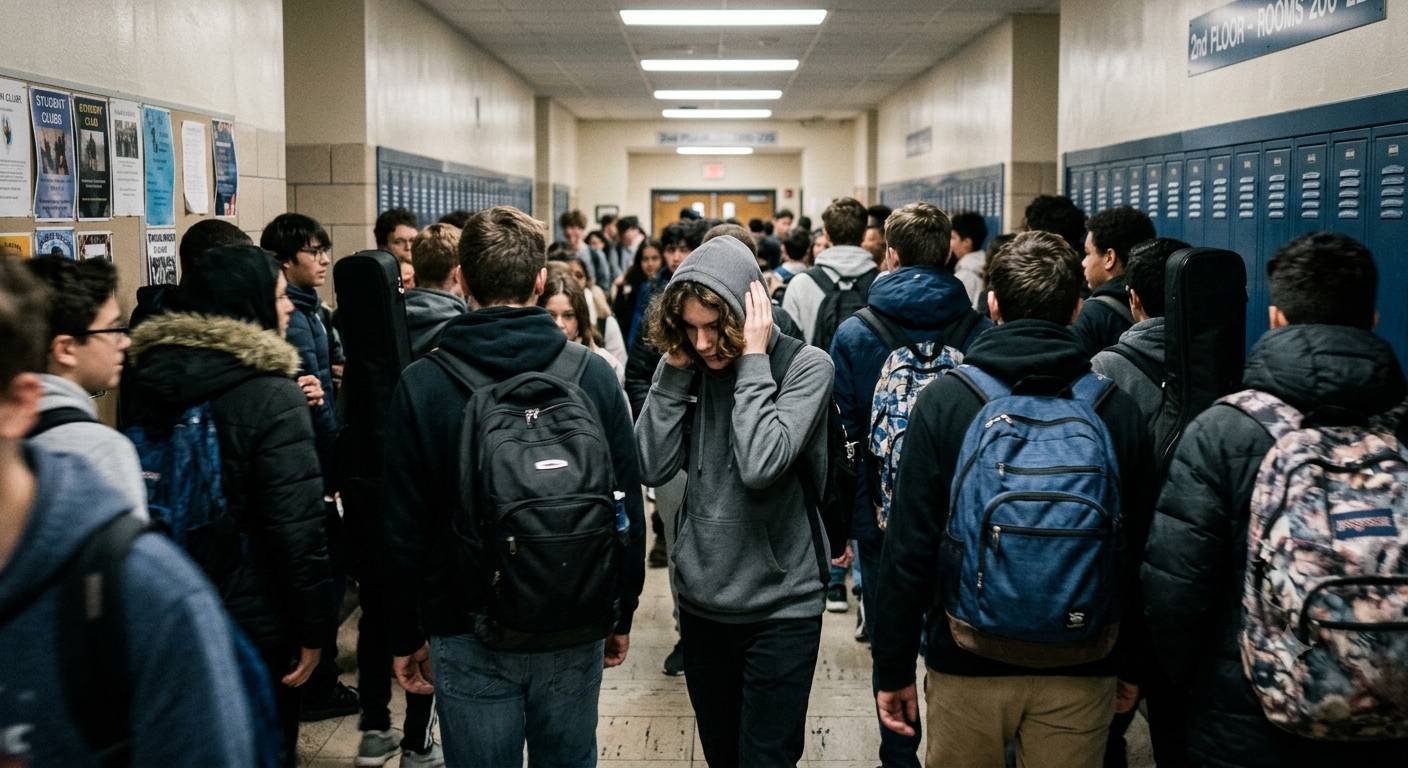
For many students, the constant roar of an overcrowded hallway is far more than just noise, it is a direct trigger for severe anxiety. By embedding social-emotional learning into the heartbeat of SD43, we don't just protect our students from the pressures of a growing district, we give them the lifelong tools they need to thrive in a complex world
We easily count the physical number of students in a building or the number of portables on a gravel field, but we often completely overlook the invisible psychological impact that overcrowding leaves behind on developing minds.
The Invisible Impact: Sensory Overload
Our schools are feeling more like high-density transit stations than calm learning environments. The non-stop auditory and visual stimulation of packed classrooms and jammed common areas causes intense sensory overload. For neurodivergent students, or those already dealing with anxiety, this environment leads to frequent internal "shutdowns," emotional exhaustion, and school avoidance.
Irritability: Students who are sensory-overloaded are less likely to practice empathy and more likely to lash out.
Targeting Vulnerable Students: Students with neurodivergent traits (like autism or ADHD) who are already sensitive to noise may experience meltdowns or visible distress in crowded spaces, which unfortunately makes them frequent targets for bullies.
Action Steps:
Pairing Physical Spaces with Social-Emotional Learning (SEL)
We cannot fix our infrastructure overnight, which means our students need the tools to manage this environmental stress right now. This is where Social-Emotional Learning (SEL) becomes a critical, non-negotiable shield. Math and reading are vital, but if a child’s nervous system is overwhelmed by a crowded environment, their brain cannot process academic information.
By integrating systemic, daily SEL frameworks into our curriculum, we actively teach students how to regulate their anxiety, manage impulses, and process sensory stress before it escalates into a behavioral crisis or an emotional meltdown.
My Commitment to Student Well-Being
As your school board trustee, I will advocate for a dual-lens approach that addresses both the physical and emotional infrastructure of our schools:
Mandating Calm-Down Spaces: I will fight to ensure that capital planning and school renovations include dedicated sensory-friendly zones and quiet spaces where overstimulated students can safely reset.
Funding Evidence-Based SEL Curricula: I will push for targeted budget allocations toward proven, age-appropriate SEL programs across all grade levels. This ensures teachers have the tools to lead daily emotional regulation practices, helping students transition from chaotic hallways into a focused learning mindset.
Equipping the Whole Child: Transforming our behavioral policies so that when a student struggles socially or emotionally due to environmental stress, our school-based teams utilize SEL frameworks to teach the missing self-regulation skills, rather than relying on purely punitive measures.
Our children aren't just losing desk space, they're losing their sense of safety. We need to build schools that allow every student to be seen, known, and protected and not lost in a crowd. Building complete, sustainable communities means investing just as heavily in the emotional infrastructure of our youth. Our schools must be structured as sanctuaries for focused learning, not sources of chronic overstimulation and stress.
