Shifting to Restorative Justice and Deep Accountability
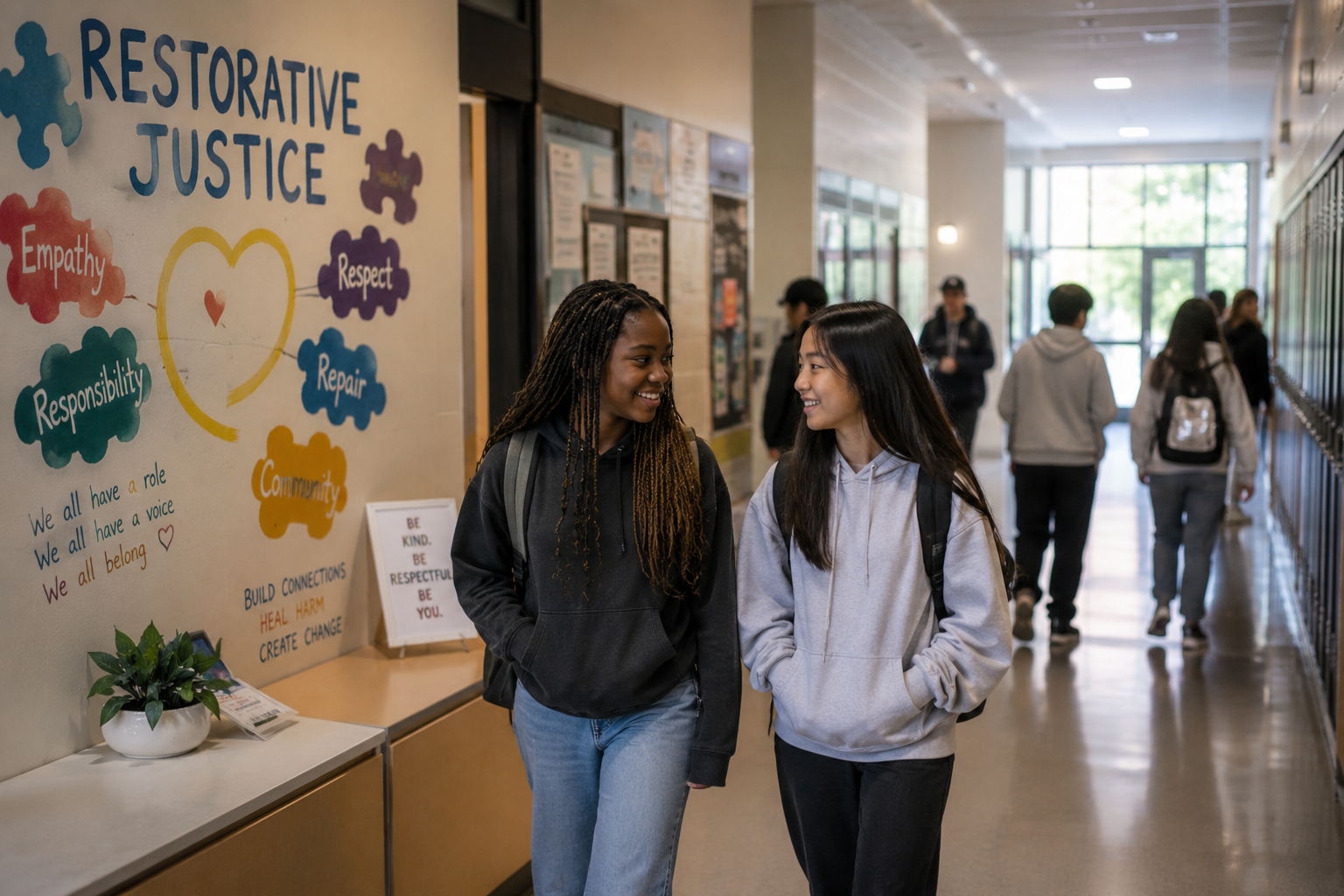
We must work to shift away from purely punitive disciplinary models and invest in structured, restorative approaches to repair community relationships.
Suspensions don’t fix broken relationships—they just delay the conversation. Part 5 of our Community Care series looks at how implementing Restorative Justice in SD43 builds safer schools by teaching true accountability.
When behavioral issues, conflicts, or bullying occur in our schools, the traditional, old-school reaction is purely punitive: hand out a suspension and send the student home. While this temporarily removes the problem from the classroom, it rarely addresses the root cause of the behavior, and it completely leaves the harmed parties out of the healing process.
Action Steps:
True accountability means teaching students to understand the literal ripple effects of their actions. Restorative justice recognizes that challenging behavior is frequently a form of distressed communication.
Instead of isolating a student, a restorative framework brings the community together to repair the harm. This model requires the individual who caused the infraction to actively listen to the impact of their choices and work collaboratively on a concrete plan to make things right.
5 Essential Ingredients for Restorative Justice:
Acknowledging Ones Actions
Acknowledging the Impact - Repairing the Community Fabric: Shifting our language from "What rule did you break, and how should you be punished?" to "Who was harmed, and what do they need to feel safe and respected again?"
Expressing Remorse
Steps to Repair - Keeping Support Networks Intact: Standard suspensions often sever a struggling student's connection to the school community, pushing them further toward isolation. Restorative practices keep students engaged with school counsellors, youth workers, and trusted educators while they take responsibility for their actions.
Steps to Prevention - Preventing the Escalation Cycle: By identifying the underlying triggers of conflict—whether it stems from overcrowding stress, learning frustrations, or trauma—we can intervene with targeted support before minor infractions turn into major safety issues.
I will advocate for the necessary funding and professional development to implement structured, evidence-based restorative justice programs across all SD43 schools. Our youth deserve a system that doesn't just punish mistakes, but actively teaches them how to build, protect, and restore safe communities.
