Modernizing Schools and Fostering Sustainability
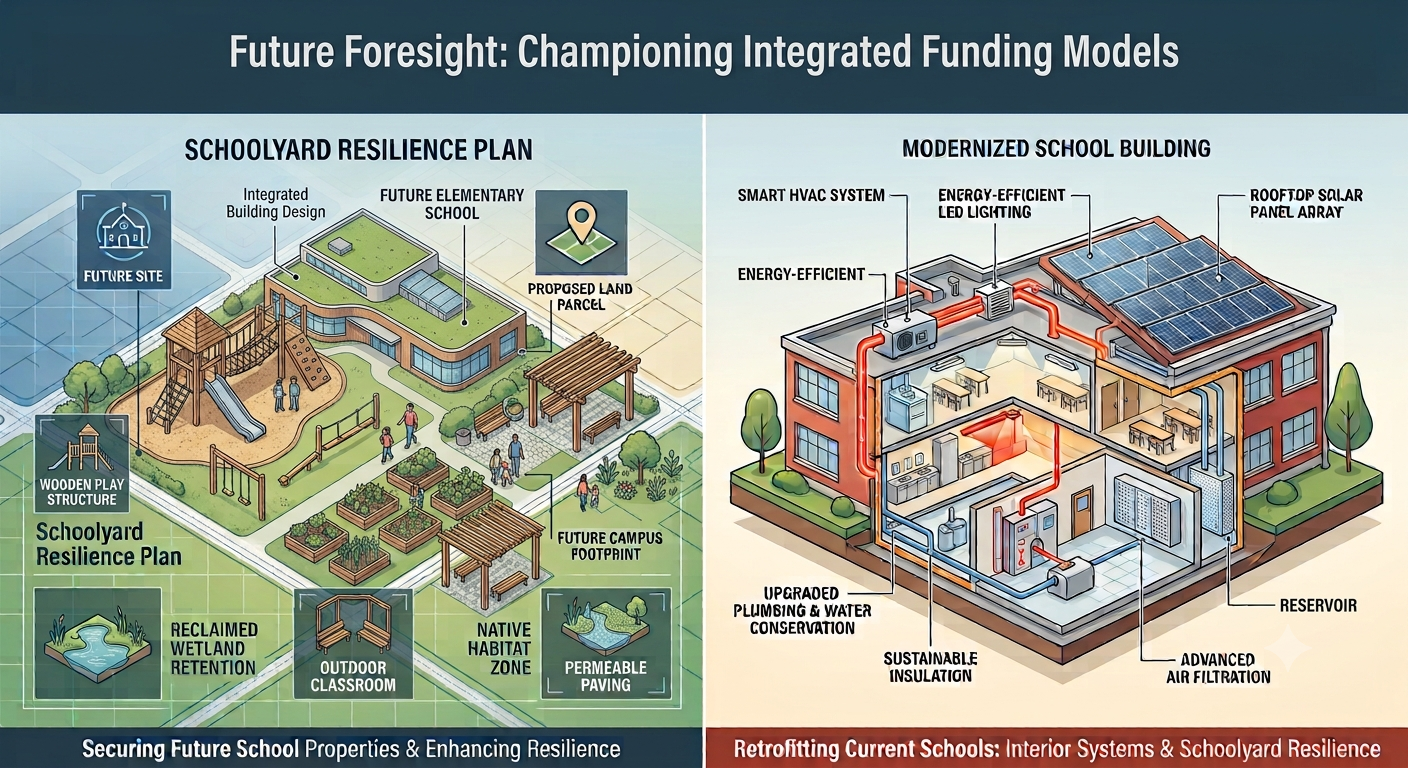
Proactive planning isn’t just about new buildings; it’s about optimizing our current schools to meet modern environmental goals and operational demands. By making smart, energy-efficient upgrades inside our existing walls, we protect taxpayer dollars, reduce our carbon footprint, and create optimal learning environments. Clean, well-regulated air is fundamental to student health and focus.
Actionable Steps:
Modernizing a school district requires looking at infrastructure through two lenses: retrofitting the brick-and-mortar buildings we use today and securing the physical land for the future. I will push to prioritize funding for modernizing the Heating, Ventilation and Air Conditioning Systems.
(HVAC) Modernization: Accelerating system improvements, boiler replacements, and advanced control systems.
3 areas where ventilation challenges generally occur in SD43
1. Older, Un-Modernized Facilities:
Schools built before modern multi-zone HVAC mandates rely on older mechanical designs.
While they undergo regular maintenance checks, their ductwork sometimes cannot handle the high-pressure loads required to upgrade to MERV-13 filters, forcing them to remain on MERV- 10 filters.
2. Portable Classrooms:
Standalone portables across the district lack integration into a school’s central ducted HVAC loop. Because they rely on independent unit ventilators or natural airflow, they are historically a primary focus for indoor air quality complaints.
3. Schools Lacking Air Conditioning:
During extreme heat waves, air circulation becomes a major community concern. Many older elementary and middle schools in the Tri-Cities lack district-wide cooling, causing stifling indoor conditions compared to newer builds like Heritage Woods Secondary.
An HVAC system doesn't just change the temperature. It regulates the entire indoor climate by balancing humidity levels, supplying fresh oxygen, and using air filters (like MERV or HEPA filters) to trap airborne particles before they enter a room.
District-Wide LED Retrofits: Transitioning older classrooms to LED lighting. LEDs use 35% to 50% less energy, last 3 to 4 times longer, and significantly cut utility and maintenance costs. Crucially for students, LEDs eliminate the low-frequency hum and fluorescent flicker that cause eye strain and learning distractions.
Fleet Electrification: Fostering a district culture of sustainability by actively transitioning our service fleet to electric vehicles.
Building for tomorrow requires a dual approach: we must secure future school properties before real estate prices skyrocket, while aggressively modernizing the mechanical and utility systems inside our current schools. These measures will keep us on track to hit the Provincial greenhouse gas reduction targets of 40% below 2007 levels by 2030.
